

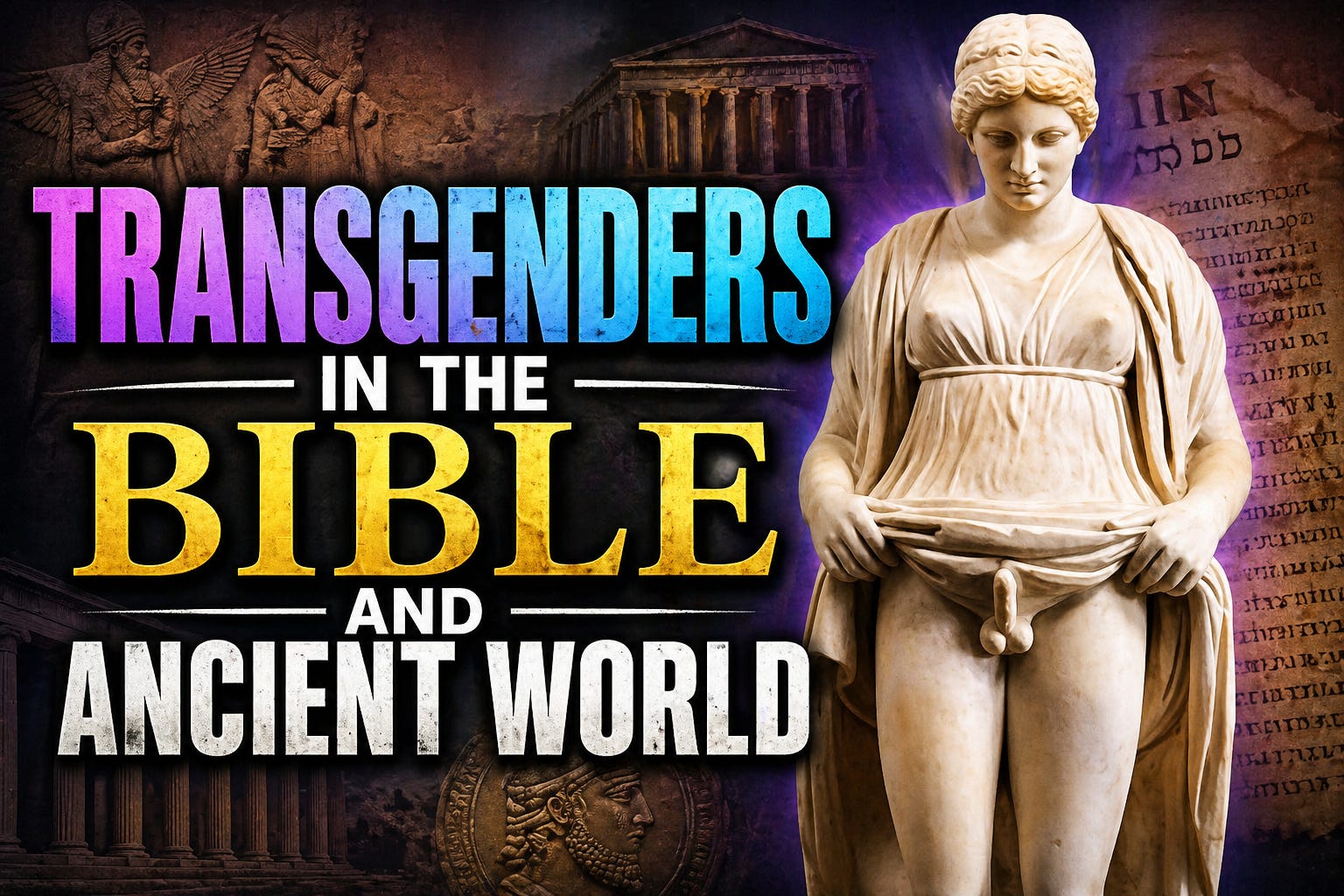
In this week’s Goddess Bible Study, we focus on a special topic: trans folks. This is a hot-button political topic these days, with a lot of sensitivity around language choices. Some people may object to my language choices here, but I am going to stick to the most accurate language I know, and you can’t please everybody.
Transgender people have existed throughout history and across cultures, and they were highly celebrated in goddess traditions of the ancient world, often serving as shamans and high priests. They appear in both the Old and New Testaments, as well as in neighboring cultures.
Many of the great goddesses, such as Ishtar and Cybele, were themselves transgender. Gender bending represents the unification of paradoxes and the wholeness of creation.
Trans people had great names in the ancient world, a few examples include:
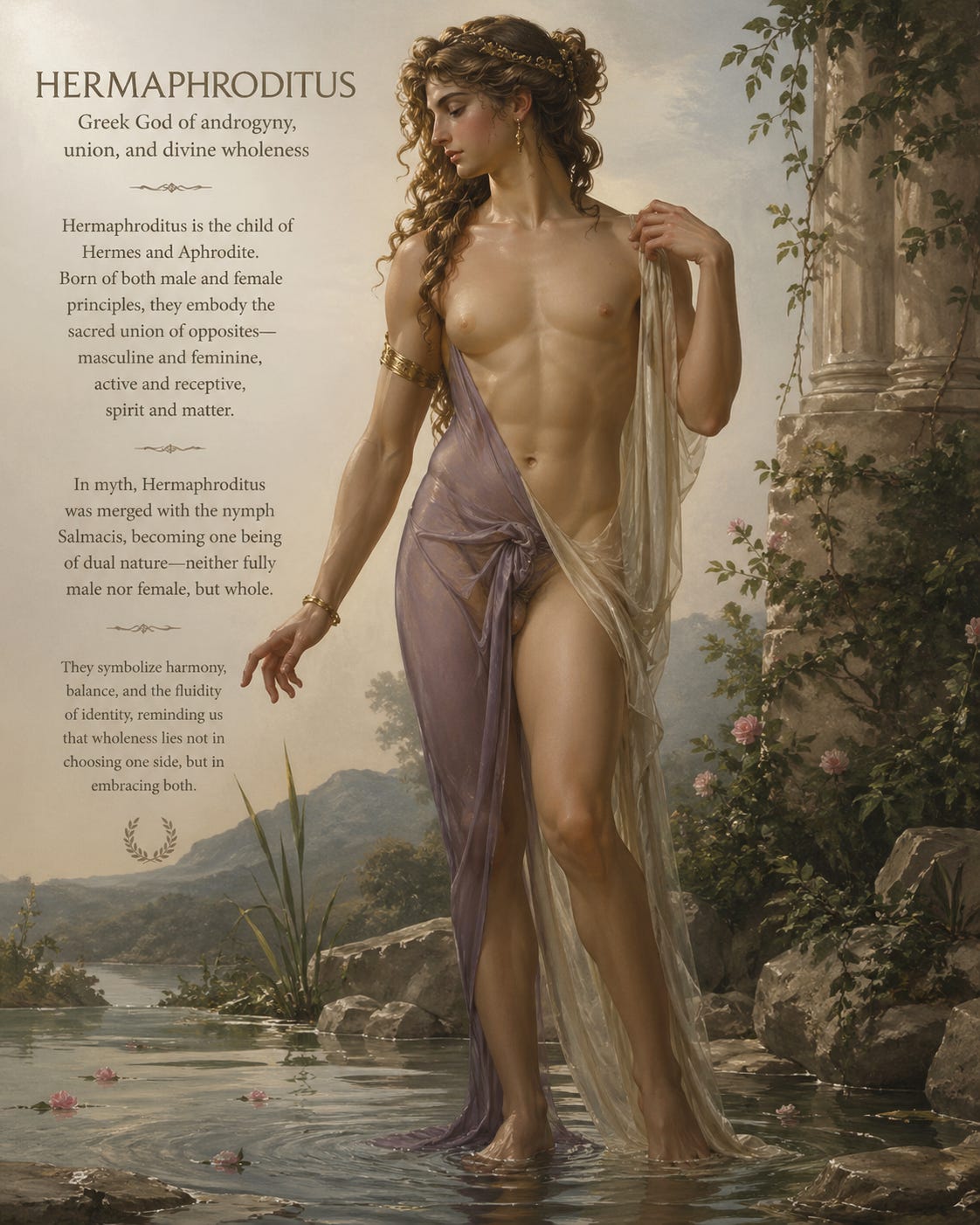
The god Hermaphroditus from Greece
Qadesh (Holy Ones) in the Bible
The Galli priests of the great Roman mother goddess Cybele
The Megabyzi at the Temple of Artemis in Ephesus
Gala priests in Sumer
Enaree shamans with the Scythians, as mentioned by Herodotus
Hijra in India and Kathoey in Thailand, who are still around today
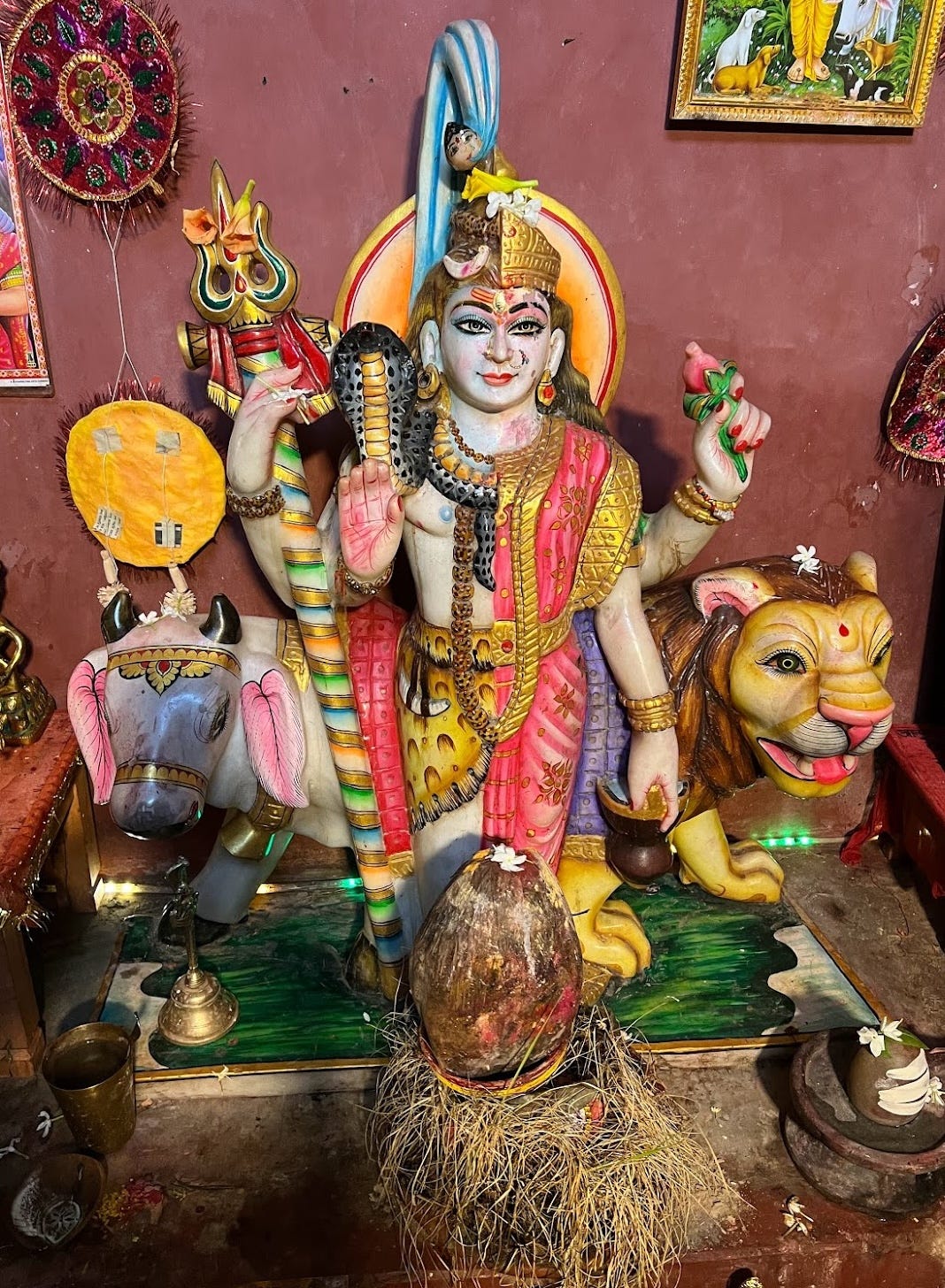
Ardhanarishvara is a Hindu god, a composite, androgynous form of Shiva and his consort Parvati (Shakti)
Merging male and female symbolizes the synthesis of masculine and feminine energies and the inseparable nature of consciousness and matter. It signifies that the union of opposites creates the rhythm of life, maintaining balance, unity, and harmony in the universe.
Jesus Christ (New Testament)
Jesus Christ described the condition of male→female transitioners perfectly in the Gospel of Matthew when he said:
“For there are eunuchs who were born that way, and there are eunuchs who have been made eunuchs by others--and there are those who choose to live like eunuchs for the sake of the kingdom of heaven. The one who can accept this should accept it.”
-Matthew 19:12
A eunuch is a castrated man, and was the common term in the ancient world that would describe today’s transexuals. Jesus describes three types: those who were born that way (biologically intersex, or hermaphrodites), those who were made by others (castrated without consent, generally to work in the palace), and those who choose it for spiritual purposes (voluntary transexuals and priests). There are also cross-dressers who maintain their sexual functions and serve in goddess traditions.
“Those who can accept this should accept it,” says Jesus.
Hebrew Bible (Old Testament)
In the Old Testament (Hebrew Bible), the male transgender priests are called the qadesh, the “holy ones”, and they were the counterparts to the female qedesha priestesses. They were prominent in the earlier pagan Israelite traditions, and they were pushed out, along with the goddesses, in the monotheistic reforms.
The qadesh are only mentioned when they are being chased away and insulted. Their names are translated in a derogatory manner. In English texts, the qadesh are called “temple sodomites” and “dogs,” just as the female qedesha are called “temple prostitutes,” and “harlots” rather than “holy ones.”
The qadesh priests are uniformly condemned by the Biblical writers as a sign of sexual degeneracy by bad pagan kings. Their removal under the reformer kings of Yahweh is celebrated. Ultimately, laws were crafted by the Israelites that forbade the practice in sacred settings.
The qadesh appear in the Biblical narrative during the periods of religious reform, when the Yahweh-alone movement attacked and attempted to destroy the old pagan Israelite traditions. We will be digging into these stories in upcoming episodes of Goddess Bible Study.
Scholars generally associate the male qadesh as being the equivalent of the Roman Galli priests, who are well documented.
Scholars debate the historical usage of the terms eunuch, qadesh, and sodomite, and admittedly, these can be slippery. We can see in the contemporary debate on these topics how fluid gender identity and sexual practices can be, and it was every bit as fluid in ancient times as well.
We only have limited information to draw conclusions from, but we do know with certainty that gender-bending is an ancient practice and was highly celebrated in many societies. We also know with certainty that the patriarchal, monotheistic faiths that restricted the nature-based practices of the goddesses were hostile to anything that made men effeminate.
“And there were also sodomites (qadesh) in the land: and they did according to all the abominations of the nations which Yahweh cast out before the children of Israel.”
-1 Kings 14:24
“And he took away the sodomites (qadesh) out of the land, and removed all the idols that his fathers had made.
-1 Kings 15:12
“And the remnant of the sodomites (qadesh), which remained in the days of his father Asa, he took out of the land.”
-1 Kings 22:46
“And he broke down the houses of the sodomites (qadesh), that were by the house of Yahweh, where the women wove hangings for the grove.”
-2 Kings 23:7
“They die in youth, and their life is among the unclean (qadesh).”
-Job 36:14
No man whose testicles have been crushed or whose penis has been cut off may enter Yahweh’s assembly.
- Deuteronomy 23:1
“There shall be no whore of the daughters of Israel, nor a sodomite (qadesh) of the sons of Israel. Thou shalt not bring the hire of a whore, or the price of a dog, into the house of Yahweh thy God for any vow: for even both these are abomination unto Yahweh thy God.”
-Deuteronomy 23:17-18
Inanna/Ishtar/Astarte
Ishtar, the Babylonian goddess of love and war (Astarte in the Bible), was herself transgender and was one of the most popular deities in the Ancient Near East. Ishtar could produce a beard and present as a man when she went into battle. In one lamentation, Ishtar says,
“I make right into left. I make left into right. I turn a man into a woman. I turn a woman into a man. I am the one who causes the man to adorn himself as a woman. I am the one who causes the woman to adorn herself as a man.”
-Ishtar in Babylon
One of Inanna/Ishtar’s most famous stories is her Descent to the Underworld, where she attempted to visit without permission and was struck dead. The goddess was rescued by sexless eunuchs and brought back to life. These characters were represented in the temples by the kurgarrū and assinnu, servants of Ishtar who dressed in female clothing and performed dances in Ishtar’s temples. Several Akkadian proverbs seem to suggest that they may have also had homosexual proclivities, and some were eunuchs.
During earlier Sumerian times, Inanna was served by priests known as Gala, who performed elegies and lamentations. Men who became gala sometimes adopted female names, and their songs were composed in the Sumerian emesal dialect, which, in literary texts, is normally reserved for the speech of female characters. Some Sumerian proverbs seem to suggest that gala had a reputation for engaging in anal sex with men.
Hermaphroditus
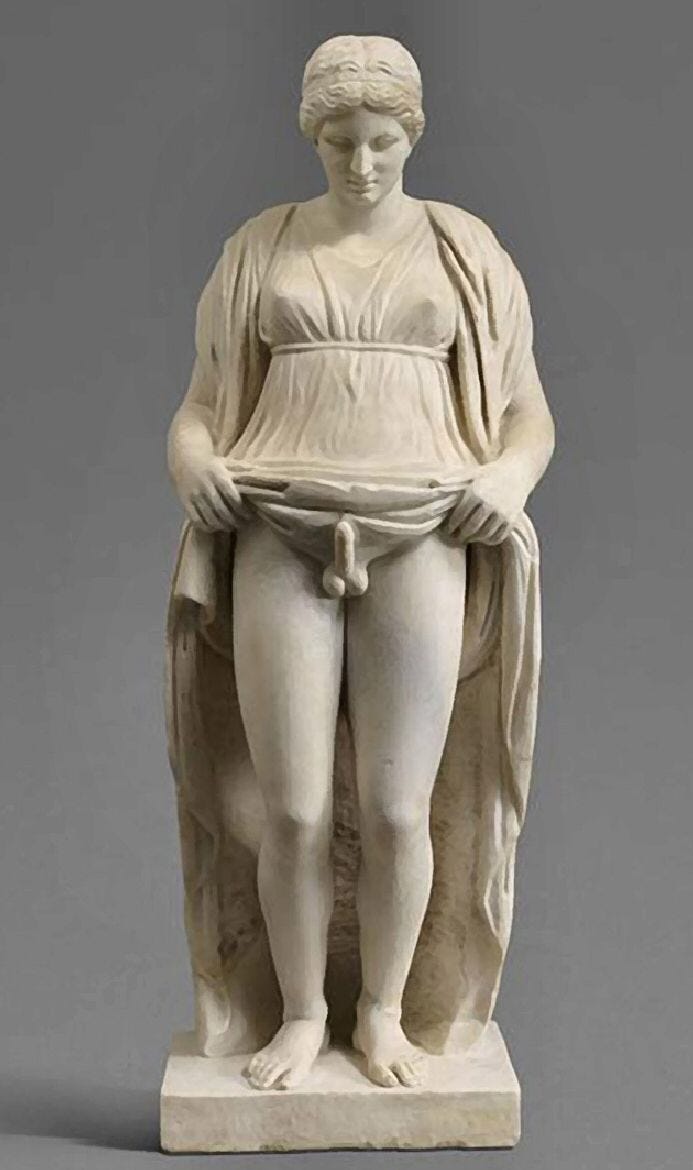
The Greeks and Romans recognized the intersex god Hermaphroditus, the child of Hermes and Aphrodite. He was a remarkably beautiful boy who was merged with a nymph who had fallen in love with him. Hermaphroditus was the god of androgyny and effeminacy and was portrayed as a woman with male genitals.
There are many examples of marble statues of Hermaphroditus from the Greek and Roman eras. Here is one example, displayed in the Louvre Musuem in Paris.
Galli Priests of Cybele
The best documented of the priestly eunuchs were the Galli priests of Rome who served Cybele, the mother of the Gods. The Galli were famous and controversial in the Roman Empire, they had long flowing hair, perfume, and bright, colorful clothes. They engaged in ecstatic rituals filled with song and dance, plant drugs, ritual sex, self-flagellation, and the blood of animal sacrifices. And in a dramatic moment of wild abandon, initiates castrated themselves with a sharp flint knife in service of the great goddess.
These traditions were incredibly ancient, they were formally imported into the Roman Empire from Anatolia (Turkey) in dramatic ceremonies at the height of the Punic Wars. Cybele was credited with helping the Romans defeat Carthage and become the mighty empire. Many temples were built in Rome to the Mater Dei, the Mother of the Gods.
Cybele’s mythology was steeped in stories of castrations and gender-bending. In a famous poem, the Roman poet Catullus detailed the shocking moment when a new initiate, lost in the frenzy of the wild, intoxicated celebrations, cut himself and bled on the forest floor, and turned from he into she.
Cybele’s Galli priests were both honored and marginalized. At this late stage of Roman paganism, hard patriarchy and machismo dominated the culture. The effeminate Galli contradicted all notions of Roman masculinity, and they were confined to their temple most of the year.
Megabyzi of Artemis at Ephesus
The biggest and most famous pagan temple in Jesus’s day was the Grand Temple to Artemis at Ephesus. It was one of the seven wonders of the ancient world and was a major pilgrimage spot for centuries.
The Megabyzi were transgendered eunuch priests who served Artemis at the Grand Temple.
The temple of Artemis makes a cameo appearance in the New Testament when the Apostle Paul visited and nearly caused a riot. (Acts 19:24-31).
When they heard this, they were furious and began shouting: "Great is Artemis of the Ephesians!" -Acts 19:28
Scythian Enaree
The Enaree roamed with the nomadic horse-riding Scythians and their Amazon warrior women. Herodotus wrote that they were hermaphrodite shamans blessed by Aphrodite Urania, the Queen of Heaven, whom the Scythians called Artimpasa.
Ardhanarishvara
Hijra of India - Kathoey of Thailand
Transgender traditions never disappeared; they lived on around the world and continue today. Some examples include the Hijra of India, and Kathoey (ladyboys) of Thailand, Cambodia, and Laos.
Hinduism recognizes Hijras as a third gender category in law and culture. Trans people have been part of South Asian society forever, but Christian missionaries and the European colonialists viewed them as depraved and worked for centuries to have them criminalized and eradicated.
Christian colonialists and missionaries introduced new sexual mores to the Indian subcontinent that rejected and criminalized homosexuality and outward expressions of gender-bending. Today, the Hijras and Kathoey continue to survive, albeit living on the fringes of society and forced into begging and prostitution to earn money.
Trans people have been around forever, they have unique identities and proud histories. Sometimes venerated and sometimes persecuted, trans people have always been visible and held distinct roles in society. Whether as musicians, sex workers, shamans, or priests, trans people tap into possibilities that most people cannot access and should be given their space to flourish.
Next episode, we will continue with our third contained subject, child sacrifice, before returning to the Bible narrative. Ritual child sacrifice was a common practice in some cultures, including the Canaanites and pagan Israelites. Eliminating child sacrifice was one of the primary reforms the Hebrew prophets of the First Temple period were attempting to achieve.
goddessbiblestudy@gmail.com
Live discussion Tuesday, April 28 at 7 pm EST.